




• New Page
  • Home
  • Contents
  • Social Media
  • Portfolio
  • Archive
  • Media Appearances
  • Talks & Presentations
  • Bio
Menu

Jean H. Lee

  • New Page
  • Home
  • Contents
  • Social Media
  • Portfolio
  • Archive
  • Media Appearances
  • Talks & Presentations
  • Bio

featured work from my portfolio

take me to the archive
Featured
BBC: The Lazarus Heist: S2 Special: The Biggest Heist Yet
Aug 25, 2025
BBC: The Lazarus Heist: S2 Special: The Biggest Heist Yet
Aug 25, 2025

$1.5 billion disappears in minutes. But what follows reveals North Korea’s expanding reach — from elite hackers to soldiers on the battlefield.

Read More →
Aug 25, 2025
AP: Tides of the Times Divide, Then Unite Korean Family
Jul 2, 2025
AP: Tides of the Times Divide, Then Unite Korean Family
Jul 2, 2025

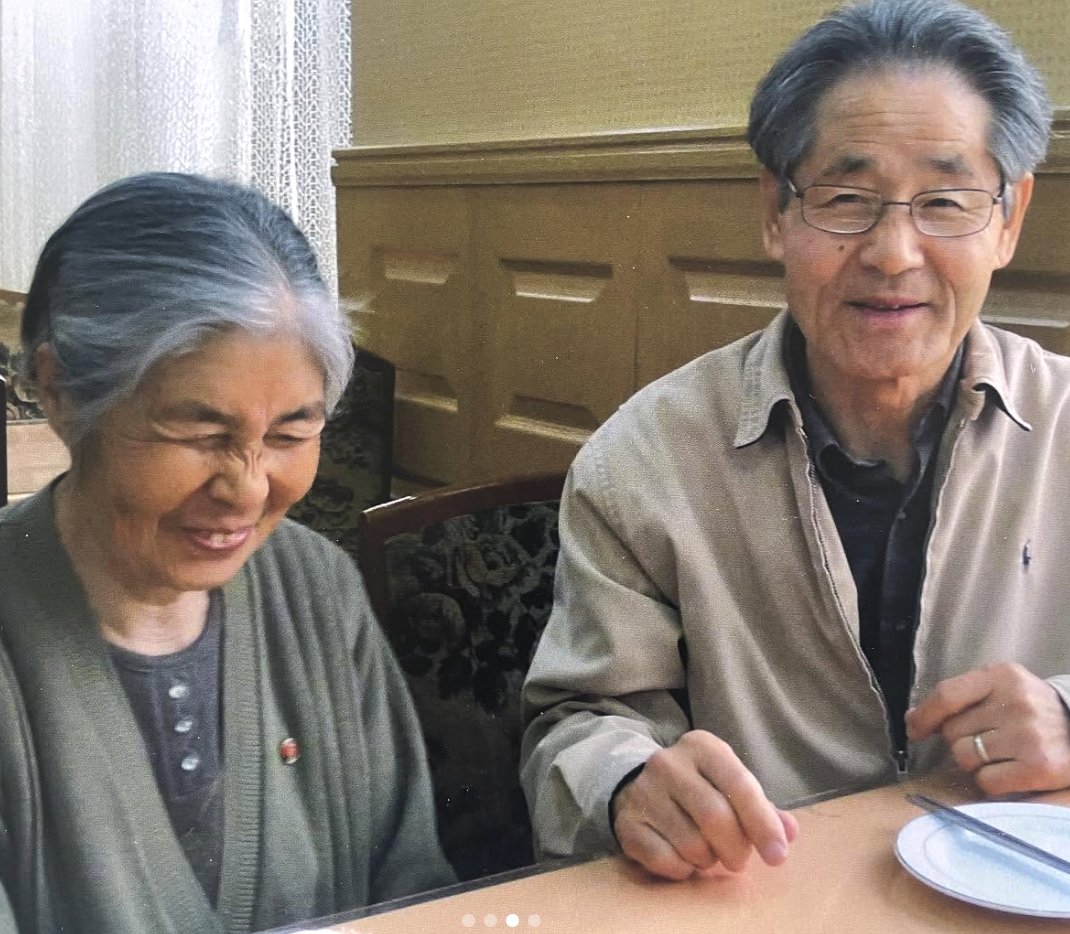
For years, Wang described himself as an orphan. Privately, to his wife, he spoke often of the 13-year-old sister he left behind, the sweet girl who went sledding with him over frozen rice fields.

“She was the only girl in the family--she was everybody’s princess, especially mine. But I had no way of knowing if she was still alive.”

Read More →
Jul 2, 2025
BBC: Lazarus Heist: The intercontinental ATM theft that netted $14m in two hours
Apr 4, 2023
BBC: Lazarus Heist: The intercontinental ATM theft that netted $14m in two hours
Apr 4, 2023

It was an audacious crime characterised by its grand scale and meticulous synchronisation. Criminals had plundered ATMs in 28 different countries, including the United States, the UK, the United Arab Emirates and Russia. It all happened in the space of just two hours and 13 minutes - an extraordinary global flash mob of crime.

Read More →
Apr 4, 2023
BBC: The Lazarus Heist: S2, Ep 1: Jackpotting
Mar 27, 2023
BBC: The Lazarus Heist: S2, Ep 1: Jackpotting
Mar 27, 2023

Millions of dollars are stolen from ATMs at the same time in 28 countries. An army of money mules stuff the cash into bags. Do they know who they are really working for? In just over two hours, the thieves take nearly $14 million - all from the accounts of Cosmos Bank in India.

Read More →
Mar 27, 2023
BBC: The Lazarus Heist
Mar 26, 2023
BBC: The Lazarus Heist
Mar 26, 2023

Download all episodes of The Lazarus Heist, watch Lazarus Heist animations, read our feature story about the hackers and view visualizations of the podcast episodes on Lazarus Heist homepage on the BBC World Service website!

Read More →
Mar 26, 2023
BBC: The Lazarus Heist: Season 2 trailer
Mar 10, 2023
BBC: The Lazarus Heist: Season 2 trailer
Mar 10, 2023

The hackers are back – and they are accused of being more dangerous than ever. Their cyber-attacks are getting more sophisticated and audacious. It’s claimed they are getting away with billions. North Korea denies everything.

Read More →
Mar 10, 2023
BBC: The Lazarus Heist - LIVE!
Sep 20, 2022
BBC: The Lazarus Heist - LIVE!
Sep 20, 2022

Lazarus Heist live

A special episode recorded in front of an audience in New York. What’s it like working in North Korea? How are hackers tracked in real time? #LazarusHeist

Read More →
Sep 20, 2022
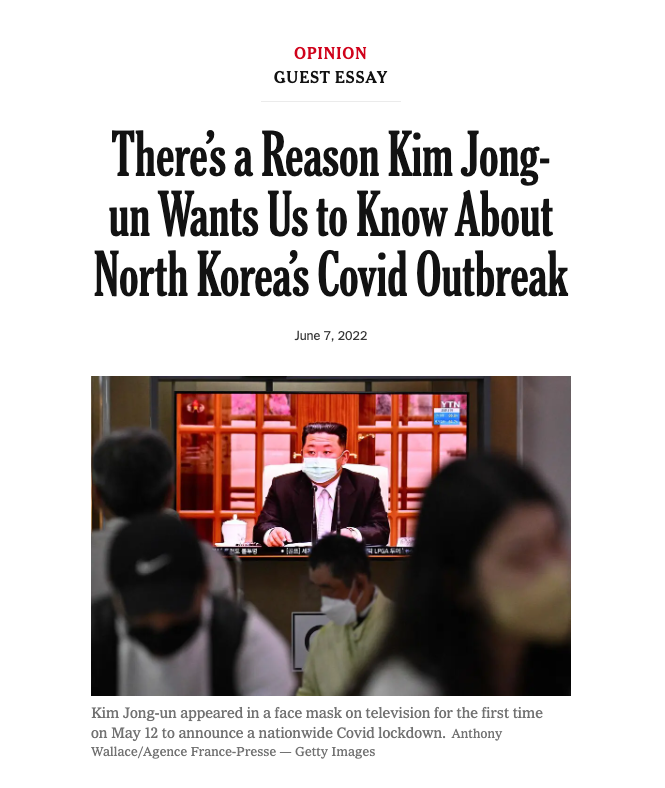
New York Times Opinion: There’s a Reason Kim Jong-un Wants Us to Know About North Korea’s Covid Outbreak
Jun 8, 2022
New York Times Opinion: There’s a Reason Kim Jong-un Wants Us to Know About North Korea’s Covid Outbreak
Jun 8, 2022

It’s a frightening prospect for an unvaccinated, undernourished nation of 25 million people. But bad news does not escape North Korea without a reason. Finally acknowledging a viral outbreak may be part of a strategy by its leader, Kim Jong-un, to re-engage with the outside world. The world should be ready to engage, too.

Read More →
Jun 8, 2022
New York Times Opinion: Kim Jong-un Is Just Getting Started
Mar 14, 2022
New York Times Opinion: Kim Jong-un Is Just Getting Started
Mar 14, 2022

If it seems as if North Korea wants us to sit up and pay attention — Don’t forget, we’re still building missiles and nuclear weapons! — that’s certainly one of its objectives.

But these tests are about a lot more.

Read More →
Mar 14, 2022
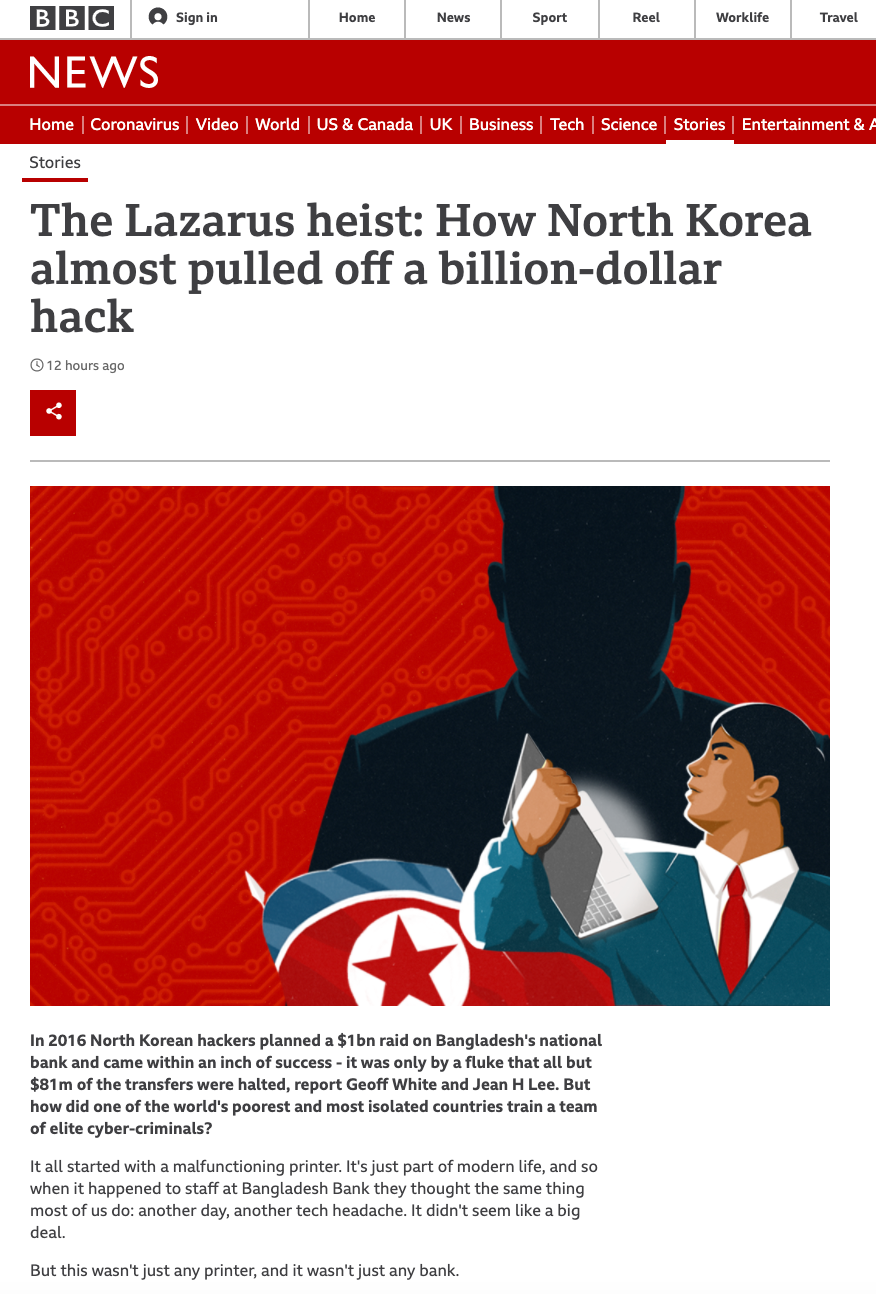
BBC: The Lazarus Heist: How North Korea almost pulled off a billion-dollar hack
Jun 21, 2021
BBC: The Lazarus Heist: How North Korea almost pulled off a billion-dollar hack
Jun 21, 2021

In 2016 North Korean hackers planned a $1bn raid on Bangladesh's national bank and came within an inch of success - it was only by a fluke that all but $81m of the transfers were halted, report Geoff White and Jean H Lee. But how did one of the world's poorest and most isolated countries train a team of elite cyber-criminals?

Read More →
Jun 21, 2021
BBC: The Lazarus Heist, S1, Ep2: Disaster Movie
Apr 27, 2021
BBC: The Lazarus Heist, S1, Ep2: Disaster Movie
Apr 27, 2021

“I was terrified.” Panic in Hollywood, careers ruined and helium filled balloons sent to North Korea. President Obama makes clear who he blames for the Sony hack.

Read More →
Apr 27, 2021
BBC: The Lazarus Heist, S1, Ep1: Hacking Hollywood
Apr 18, 2021
BBC: The Lazarus Heist, S1, Ep1: Hacking Hollywood
Apr 18, 2021

A movie, Kim Jong-un and a devastating cyber attack. The story of the Sony hack. How the Lazarus Group hackers caused mayhem in Hollywood and for Sony Pictures Entertainment. And this is just the beginning…

Read More →
Apr 18, 2021
BBC: Introducing the Lazarus Heist
Apr 8, 2021
BBC: Introducing the Lazarus Heist
Apr 8, 2021

The most daring bank theft ever attempted? From hacking Hollywood to a billion-dollar plot. Premieres 19 April 2021. With Geoff White and Jean Lee.

Read More →
Apr 8, 2021
Wilson Quarterly: Guns and Hunger
Jun 20, 2020
Wilson Quarterly: Guns and Hunger
Jun 20, 2020

My family’s wartime tale is not particularly remarkable; their harrowing experience could be told a million times over. This is not a tale of military heroism, or even one of selfless sacrifice. It is simply the story of one family of ordinary Koreans who survived the three cruel and crushing years of war that killed nearly a million South Korean civilians.

Read More →
Jun 20, 2020
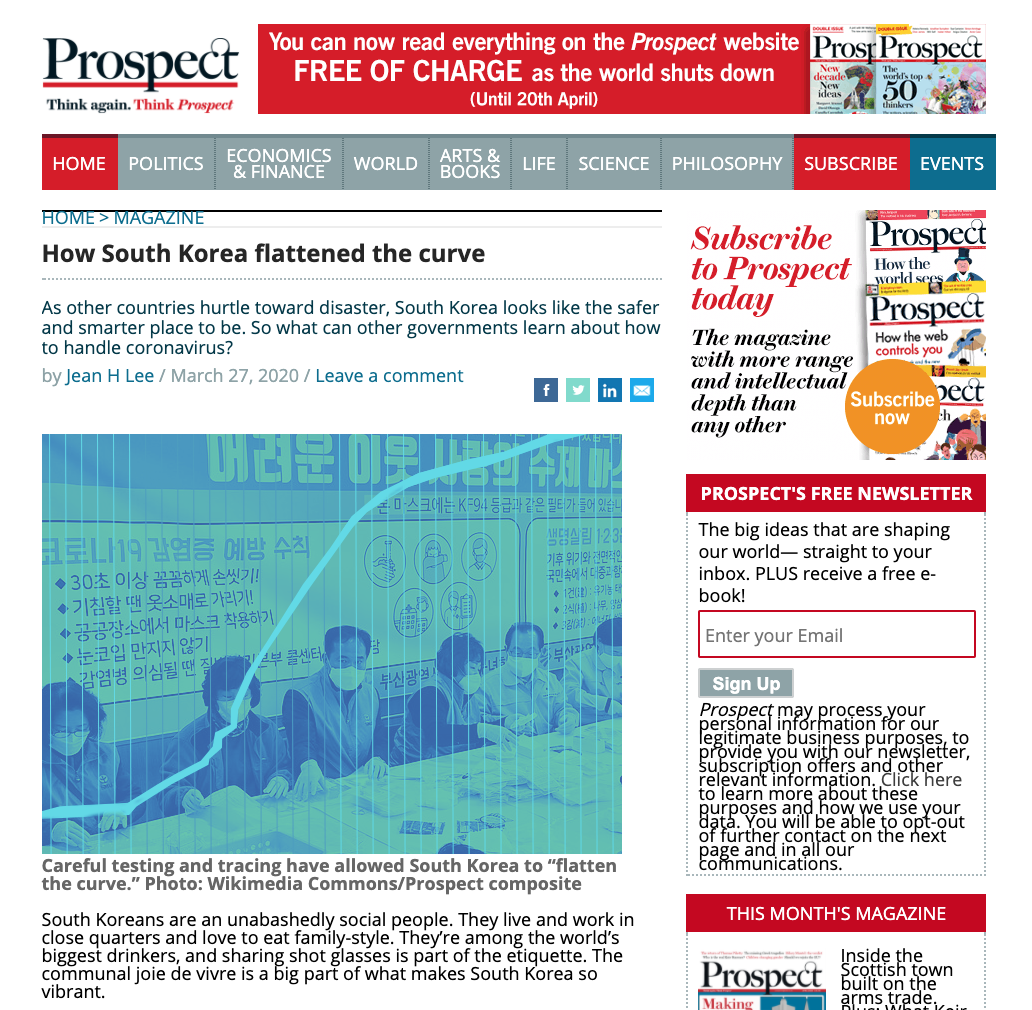
Prospect: How South Korea flattened the curve
Mar 27, 2020
Prospect: How South Korea flattened the curve
Mar 27, 2020

As other countries hurtle toward disaster, South Korea looks like the safer and smarter place to be. So what can other governments learn about how to handle coronavirus?

by Jean H Lee / March 27, 2020 

Read More →
Mar 27, 2020
Asia Dispatches: Korea Rising: Why We’re Celebrating Parasite’s Big Oscar Night
Feb 11, 2020
Asia Dispatches: Korea Rising: Why We’re Celebrating Parasite’s Big Oscar Night
Feb 11, 2020

Bong “came of age just as South Korea was making the transition to the First World and as the internet brought the world to Seoul. His influences are broad and worldly, and his movies reveal a newfound sense of empowerment and independence as a South Korean. He made a South Korean film, set in South Korea, touching on South Korean issues — but informed by techniques and inspiration gleaned from influences around the world. I’m in awe of his vision — and his strength of mind in casting aside conformism to make a film that risked the disapproval of those who seek to portray South Korea in only a positive light."

Read More →
Feb 11, 2020
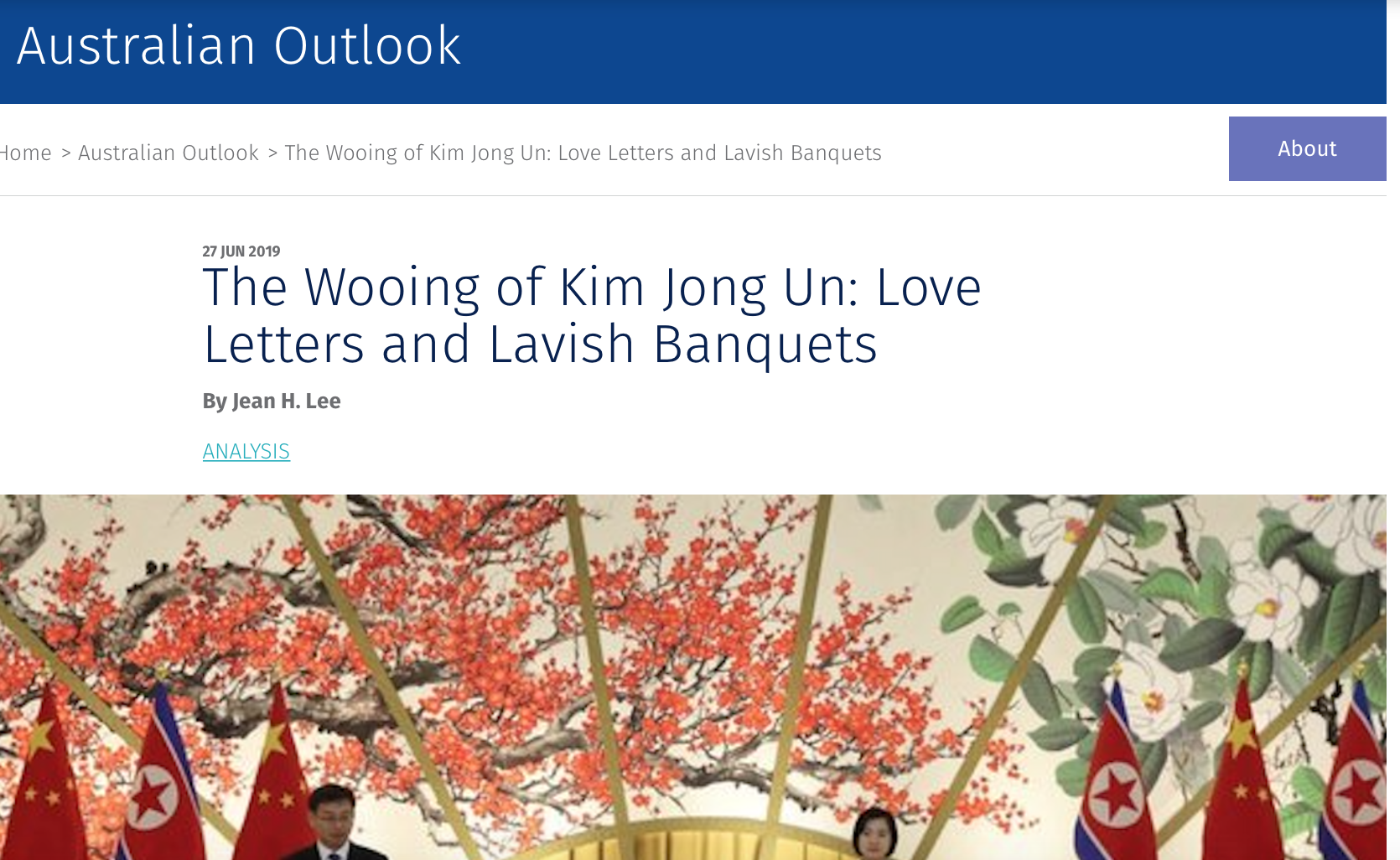
Australian Outlook: The Wooing of Kim Jong Un: Love Letters and Lavish Banquets
Jun 28, 2019
Australian Outlook: The Wooing of Kim Jong Un: Love Letters and Lavish Banquets
Jun 28, 2019

What a difference a week makes when it comes to diplomacy with North Korea.

Earlier this month, one year after the dramatic Singapore Summit of June 2018, nuclear negotiations with North Korea appeared stuck in a standstill. Pyongyang was giving friends and foes the cold shoulder as leader Kim Jong Un remained in retreat following his failed second summit with US President Donald Trump in Hanoi in late February.

Then, in the span of just a few heady days from 20 June to 22 June, Kim not only hosted Chinese President Xi Jinping in a state visit that granted the young North Korean leader tremendous legitimacy but also revealed the exchange of another set of “love letters” with Trump.

In a flash, we went from fears of provocation to the first movement on the moribund nuclear negotiations with North Korea in months. With Trump heading to Asia for the G20 summit and high-level meetings with Xi, Japan’s Shinzo Abe and South Korea’s Moon Jae-in, we’re likely to hear calls for a third Trump-Kim summit as regional leaders seek to build momentum for renewed talks with North Korea.

And despite the head-spinning speed of developments, none of this comes as a surprise. Here’s why.

Read More →
Jun 28, 2019
NPR: 2 Generations, 2 Different Perspectives On Korean Reunification
May 15, 2018
NPR: 2 Generations, 2 Different Perspectives On Korean Reunification
May 15, 2018

Fleeing war in North Korea in 1951, my aunt and her siblings scrambled aboard an American cargo ship pulling away from port, her parents and grandmother shouting their names to keep track of them in the chaos of the evacuation. They made it. But their grandfather stayed behind in Wonsan to protect the family property.

He thought his family would return. They never saw him, or the rest of their family in North Korea, again.

As the leaders of North Korea, South Korea and the United States discuss denuclearization and a possible peace treaty to formally end the Korean War of the 1950s, I wanted to check in with my aunt, a child of the war who was born in North Korea, and her millennial daughter Euni Cho, who grew up in democratic, thriving South Korea.

Read More →
May 15, 2018
BBC Radio 4: A Korean Thaw?
Feb 12, 2018
BBC Radio 4: A Korean Thaw?
Feb 12, 2018

From bombs to Olympic banners: Can winter sports diplomacy stop a war in the Korean peninsula? North Korea's leader Kim Jong Un took the world by surprise with his announcement that his nation and South Koreawould unite under a single banner at the Winter Olympics. Was it a diplomatic masterstroke or a cynical stunt? Journalist Jean Lee pieces together what really led to this public relations coup. 

Read More →
Feb 12, 2018
New York Times Sunday Review: Will North Korea Win the Gold Medal for Deceit?
Feb 8, 2018
New York Times Sunday Review: Will North Korea Win the Gold Medal for Deceit?
Feb 8, 2018

North Korea’s participation in these Olympics runs the risk of rewarding bad behavior and handing Mr. Kim a diplomatic victory that he will brandish as proof that his strategy was right. Still, we have to start somewhere after so many years of tension.

Read More →
Feb 8, 2018
KEI: Soap Operas and Socialism
Dec 18, 2017
KEI: Soap Operas and Socialism
Dec 18, 2017

Romance, humor, tension — everyone loves a good sitcom, even North Koreans. But in North Korea, TV dramas are more than mere entertainment. They play a crucial political role by serving as a key messenger of party and government policy. They aim to shape social and cultural mores in North Korean society. And in the Kim Jong-un era, they act as an advertisement for the “good life” promised to the political elite. 

Read More →
Dec 18, 2017
New York Times Op-Ed: Donald Trump is giving North Korea exactly what it wants
Aug 11, 2017
New York Times Op-Ed: Donald Trump is giving North Korea exactly what it wants
Aug 11, 2017

If President Trump thinks that his threats last week of “fire and fury” and weapons “locked and loaded” have North Koreans quaking in their boots, he should think again. If anything, the Mao-suit-clad cadres in Pyongyang are probably gleeful that the president of the United States has played straight into their propaganda.

Read More →
Aug 11, 2017
Esquire: Inside Kim Jong Un's bloody scramble to kill off his family
Aug 10, 2017
Esquire: Inside Kim Jong Un's bloody scramble to kill off his family
Aug 10, 2017

While Kim Jong Un stares down his enemies abroad, it's easy to forget that he's also fighting a battle from within his own borders: to survive at all costs. Like any autocratic leader, he's under constant pressure to maintain order and allegiance. But his youth and inexperience make staying in power that much more of a challenge, which in turn requires absolute control. Opposition must be eliminated. No one is safe, not even his own family.

Read More →
Aug 10, 2017
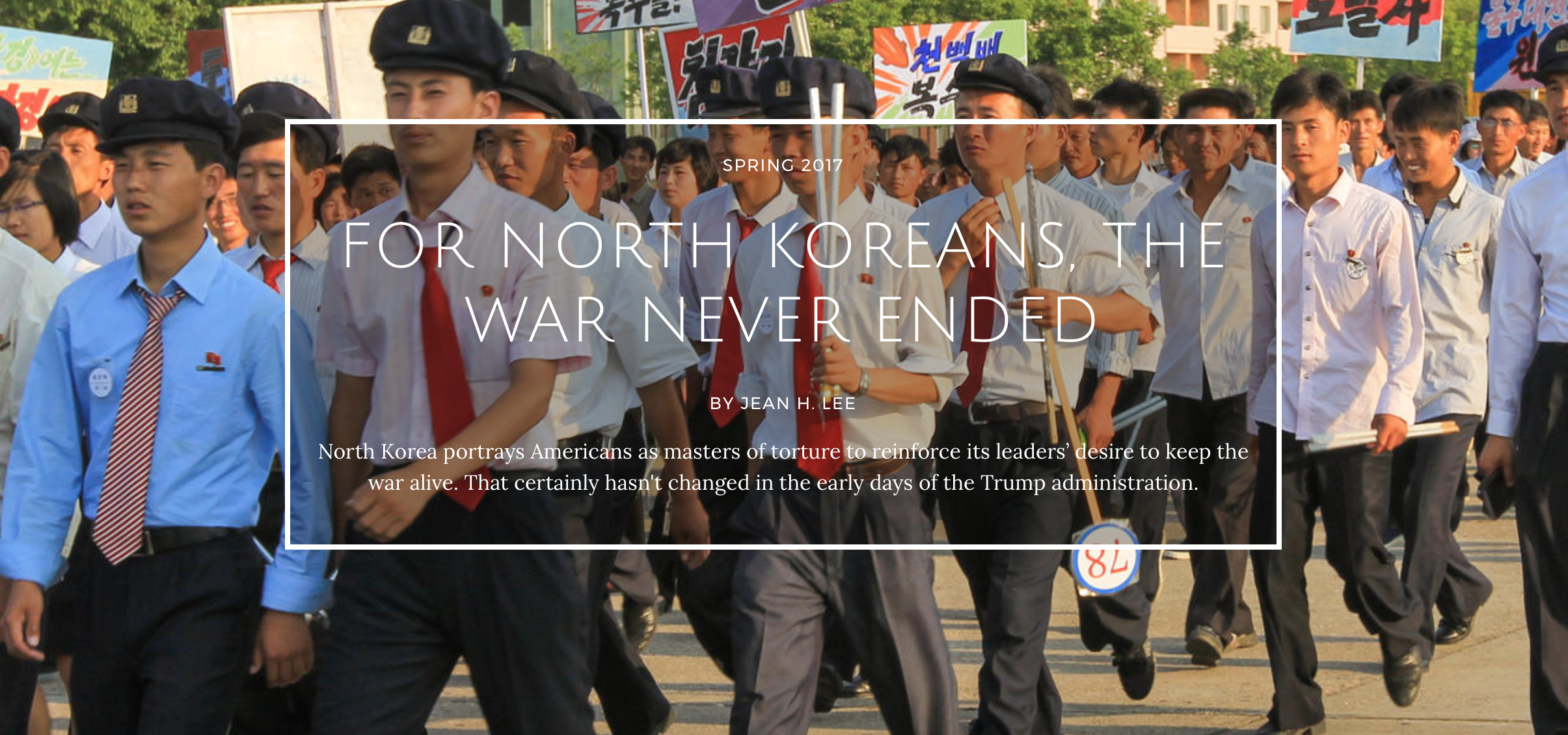
Wilson Quarterly: For North Korea, the War Never Ended
Jun 1, 2017
Wilson Quarterly: For North Korea, the War Never Ended
Jun 1, 2017

We in the United States often call the Korean conflict the “Forgotten War.” My high school history textbook in Minnesota devoted barely a paragraph to it, and growing up as the child of Korean immigrants, I knew almost nothing about a war my own parents survived as children. But the war is very much alive and present in North Korea, and the standoff with the United States figures prominently in their propaganda, identity, and policy. 

Read More →
Jun 1, 2017
New York Times Op-Ed: North Korea's Palace Intrigue
Feb 24, 2017
New York Times Op-Ed: North Korea's Palace Intrigue
Feb 24, 2017

After the 14th-century Korean ruler Taejo, founder of the Joseon dynasty, chose the youngest of his eight sons to succeed him, a spurned son killed the heir apparent and at least one of his other half brothers and eventually rose to the throne. Today, rumors of royal fratricide are again swirling, this time around the court of Kim Jong-un, the ruler of North Korea.

Read More →
Feb 24, 2017
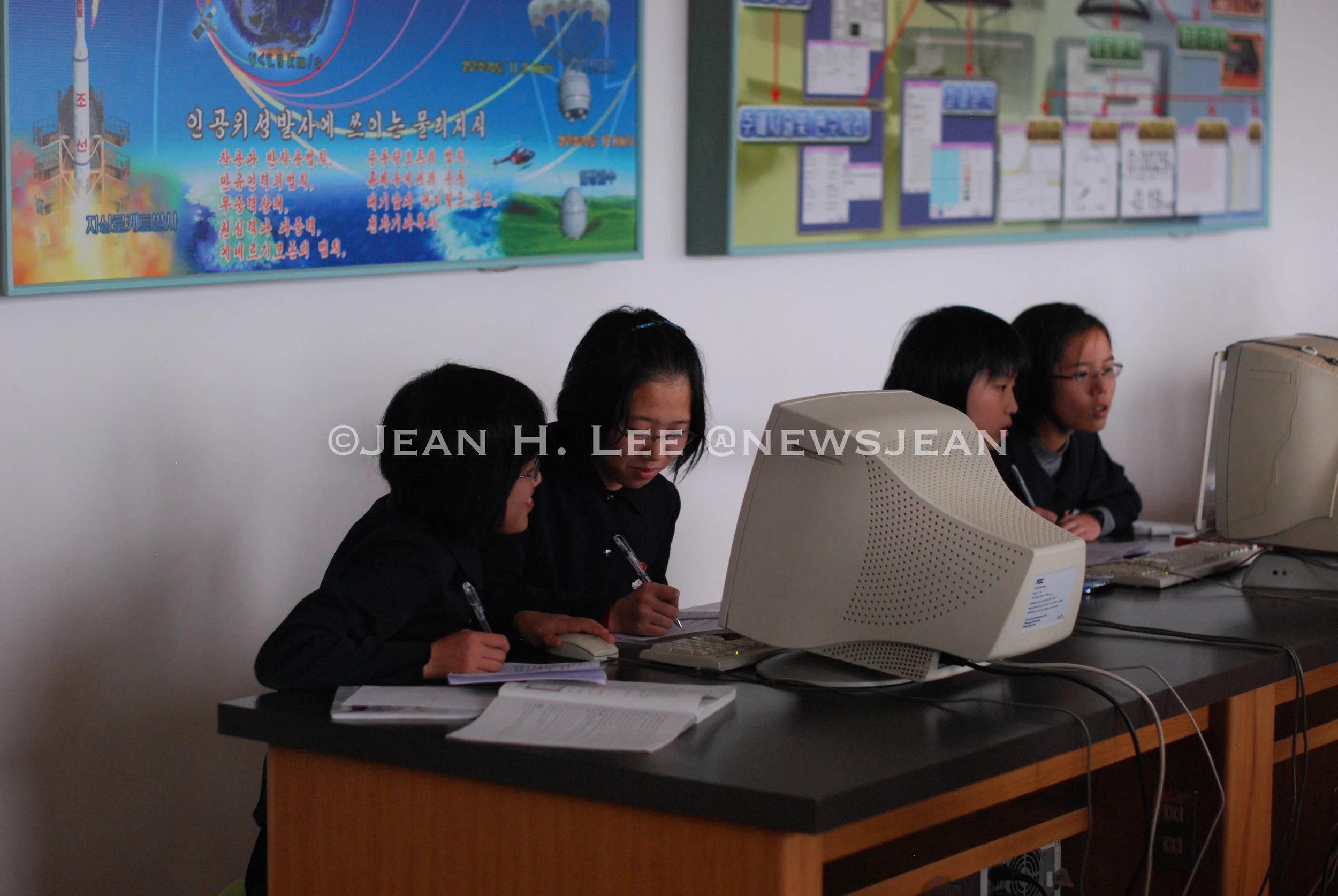
 PYONGYANG, North Korea -- Middle school students work on a computer in front of a poster of North Korea's rockets and satellites behind them in this photo taken in Pyongyang, North Korea, on Oct. 24, 2011. (Photo credit: Jean H. Lee)
Jan 7, 2016
New York Times Magazine: Kim Jong Un's Generational Ambitions
Jan 7, 2016

It was party time in Pyongyang. Workers scrambled to hang congratulatory banners in the lobby of the Koryo Hotel, my home away from home in the North Korean capital, where I was posted as an Associated Press correspondent. A gaggle of cooks, still in aprons and chef’s hats, dashed out from the kitchen to watch the festivities, and mothers tightened the pink bows in their daughters’ hair as the girls fidgeted in anticipation.

Read More →
Jan 7, 2016
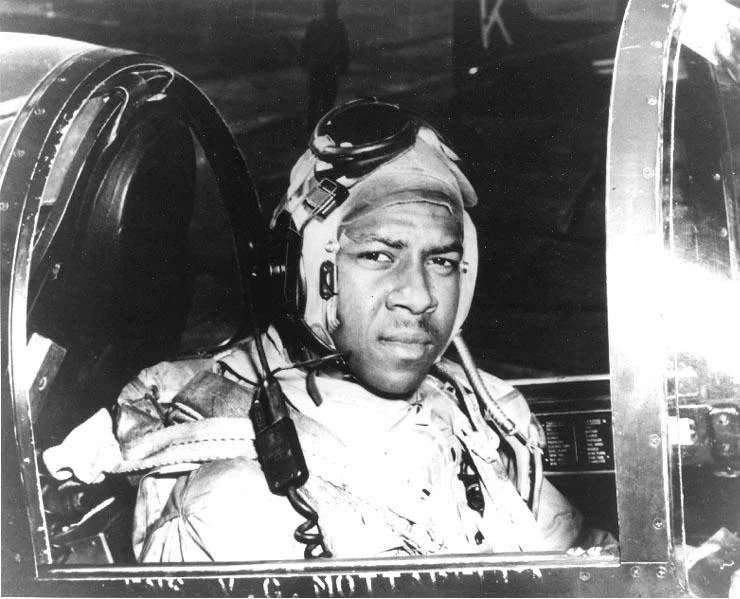
Jesse Brown.jpg
Jul 20, 2013
AP: Vet Returns to North Korea for 1st Black Navy Aviator
Jul 20, 2013

Two years after he made history by becoming the Navy's first black pilot, Ensign Jesse Brown lay trapped in his downed fighter plane in subfreezing North Korea, his leg broken and bleeding. His wingman crash-landed to try to save him, and even burned his hands trying to put out the flames.

Read More →
Jul 20, 2013
AP: Pyongyang Glitters, but Rest of North Korea Still Dark
Apr 29, 2013
AP: Pyongyang Glitters, but Rest of North Korea Still Dark
Apr 29, 2013

A year after leader Kim Jong Un promised in a speech to bring an end to the "era of belt-tightening" and economic hardship in North Korea, the gap between the haves and have-nots has only grown with Pyongyang's transformation.

Read More →
Apr 29, 2013
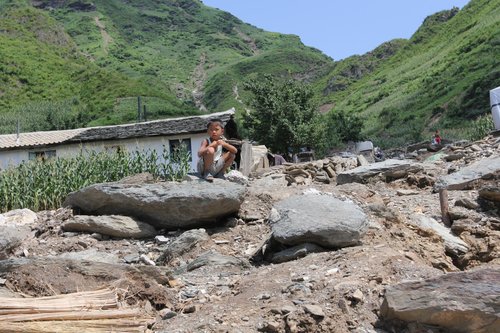
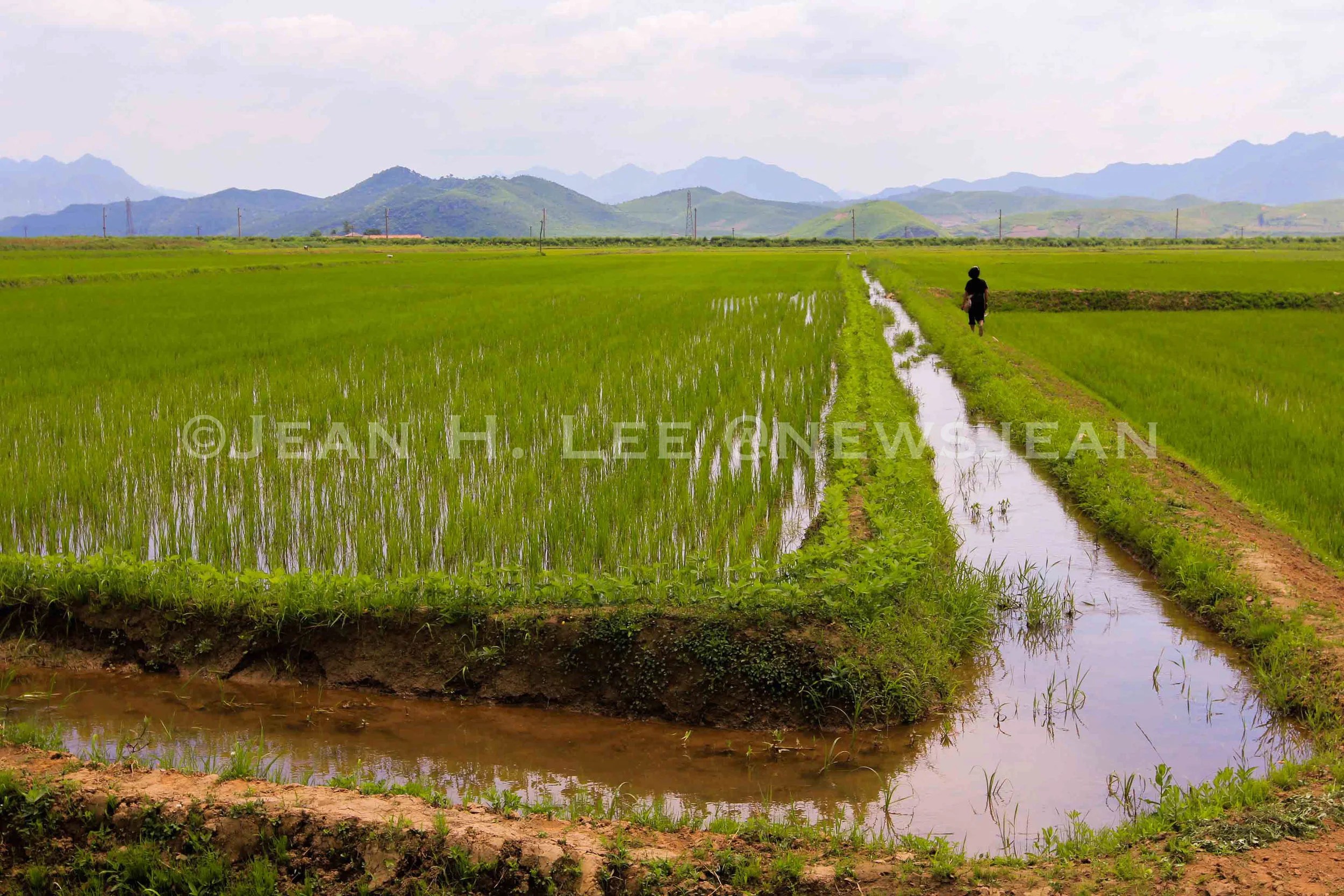
AP: Sweeping New Changes Expected at North Korean Farms
Sep 24, 2012
AP: Sweeping New Changes Expected at North Korean Farms
Sep 24, 2012

North Korean farmers who have long been required to turn most of their crops over to the state may now be allowed to keep their surplus food to sell or barter in what could be the most significant economic change enacted by young leader Kim Jong Un since he came to power nine months ago.

Read More →
Sep 24, 2012
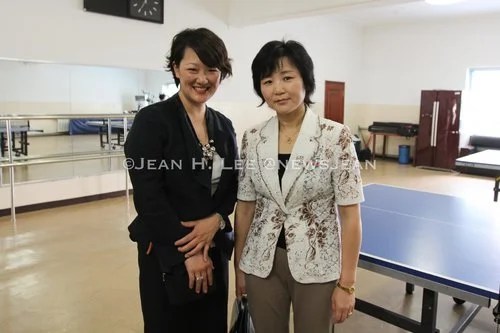
AP: Ex-North Korean Star Recalls 'Ping Pong Diplomacy'
Jul 12, 2012
AP: Ex-North Korean Star Recalls 'Ping Pong Diplomacy'
Jul 12, 2012

Her eyes well up when Li Pun Hui recalls her role in a historic example of "ping pong diplomacy."

"For 50 days, 24 hours a day, we lived together as one, trained together, slept in the same room and ate all our meals together," Li told The Associated Press at an interview in Pyongyang. "We shared the same food and our feelings."

Read More →
Jul 12, 2012
Photo credit: Jean H. Lee. All Rights Reserved.

Photo credit: Jean H. Lee. All Rights Reserved.

AP: North Korea Rebuilds Pyongyang to Welcome New Leader →

March 31, 2012

By Jean H. Lee

PYONGYANG, North Korea (AP) -- The sprawling site, which buzzes in the shadow of a giant bronze statue of North Korea founder Kim Il Sung, looks at first like a high-security military installation.

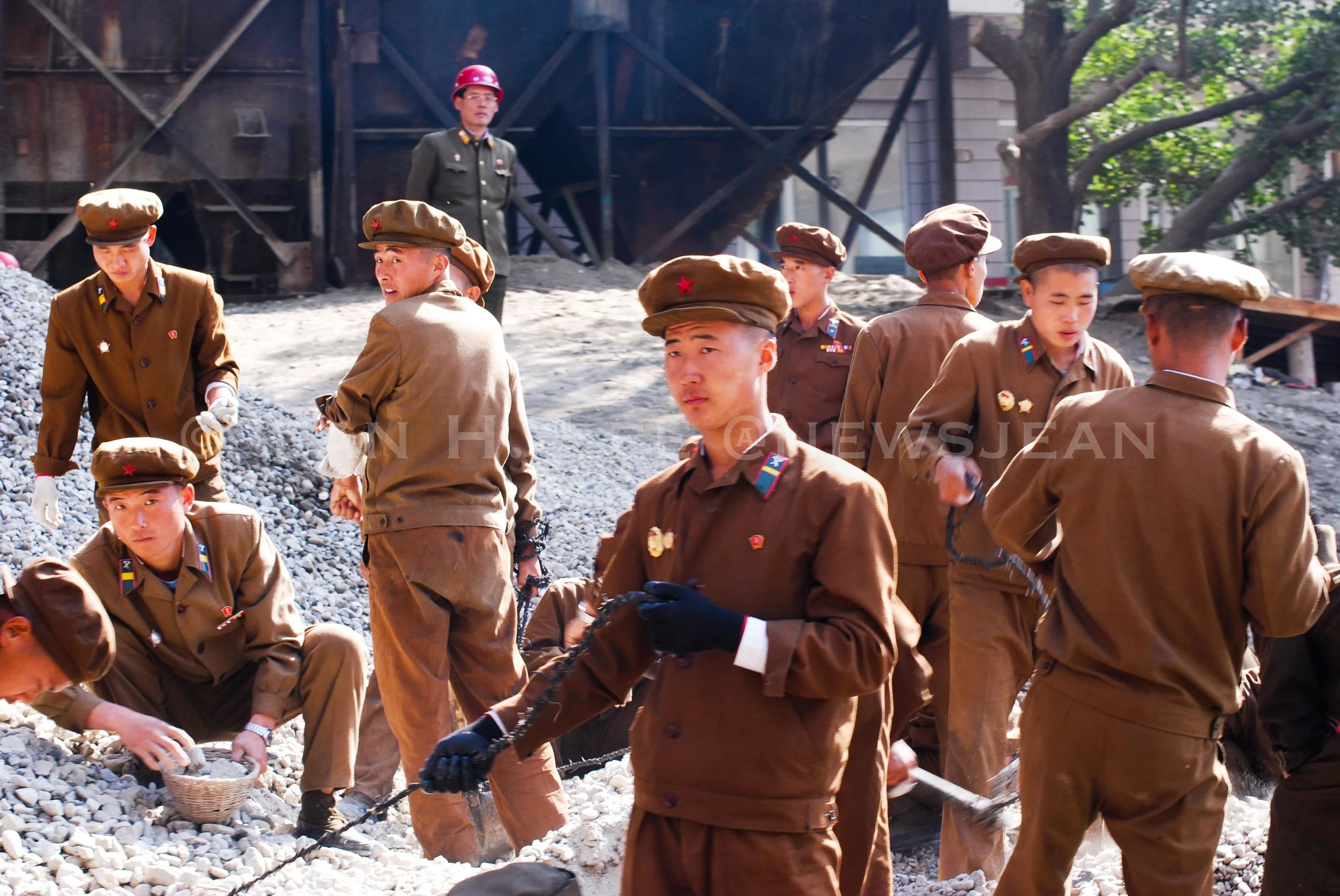
Scores of soldiers march through a zone sealed off by green mesh fencing and checkpoints. A crew of about 1,000 soldiers and 2,000 police officers works around the clock, along with thousands more civilians in street clothes and hard hats, spurred on by billboards that rate their performance.

But they are not building tanks here at the foot of Mansu Hill, or weapons, except perhaps for a propaganda war. They are building 3,000 new apartments, a department store, schools and a theater, in the hope of selling a modern version of Pyongyang to the people of North Korea albeit one that most will never get to see.

North Korea has long been known for its military-first policy, which in effect translated into a military-only policy with little room left for investment anywhere else. But now, without abandoning its focus on what it calls defense and the world calls defiance, it also appears to be trying to revive a dying economy and rebuild on the home front.

The stated aim of the reconstruction sweeping Pyongyang is to put North Korea on the path of being a "strong and prosperous nation" in time for the 100th anniversary of the birth of founder and president Kim Il Sung on April 15. But the campaign also serves another political purpose: It sets up Kim Jong Un as the new leader of a great people, just as a construction frenzy heralded his father's ascension before him.

"They had hoped, and will sell it to their people, that they've achieved something by the time this anniversary comes around," said Hazel Smith, a professor of humanitarianism and security at Britain's Cranfield University who lived in North Korea for a few years. "This is to show their own people they are not poor and underdeveloped. ... Construction is the cheapest thing you can do and show visible results if you're an economy that hasn't got much money."

Thirty years ago, when Kim Il Sung was grooming his son Kim Jong Il to succeed him, he launched an urban makeover of Pyongyang, the capital city. The iconic landmarks built during that succession campaign included the Mansudae Assembly Hall, the May Day Stadium where the Arirang Mass Games are held, and the ornate Grand People's Study House overlooking the vast plaza where the nation's biggest parades and rallies are staged.

But upon taking power after his father's death in 1994, Kim Jong Il focused resources on the nation's defense, beefing up the army and pumping money into nuclear weapons and ballistic missile programs. Projects like the 105-story Ryugyong Hotel, a pyramid-shaped behemoth once envisioned as the world's tallest building, stalled as funds for construction dried up.

In turn, the succession of his son Kim Jong Un has again brought a wave of construction, but this time the blueprints call for new homes, shopping centers, restaurants and playgrounds. They fit into a distinct policy shift designed to suggest that the younger Kim's leadership will improve the economy and the quality of life.

In truth, much of the country is likely to remain poor. Pyongyang, the capital city, houses only 3.25 million of North Korea's 24 million people, with residency viewed as a privilege reserved for the political elite.

Outsiders, even North Koreans, must obtain permission to visit the capital, and checkpoints are guarded by armed soldiers. What North Koreans know about their own capital city is mostly what they see on the evening news, which remains the main source of entertainment and propaganda for those lucky enough to have a TV and a steady supply of electricity.

However, Pyongyang still serves as the biggest billboard for the government's messages both to the outside world and to its own people. Just about every prominent building and statue in North Korea is located in Pyongyang, said Brian Myers, a professor at Dongseo University in South Korea and expert on North Korean propaganda.

"It really is the apex of all propaganda and political life," he said. "The fact that the buildings are so monumental, they are very good at eliciting pride in the state."

The new stress on the economy started three years ago, after Kim Jong Il fell ill and his coterie of advisers began preparing for a leadership change. Officials laid out plans to resuscitate the economy and, in the process, perhaps establish some domestic stability before the transition to a new Kim.

Food was key: North Korea, with little arable land and outdated farming practices, has struggled for years to feed its people. New plans called for modernizing farming and light industry, and outfitting select farms and factories with computers and high-tech machinery from Europe.

Another focus was construction. Last April, North Korea's parliament approved setting aside 15.8 percent of the state budget for defense, the same percentage as the previous year. But in a significant change, the allocation for construction increased by 15 percent to nearly $6 billion. State media did not publish a total figure for the yearly budget.

Units were tacked onto apartment buildings, while the Grand Theater, Kaeson amusement park, Kim Il Sung University and other landmarks were renovated. Solar-powered street lamps landed on streets downtown, and glass dividers went up around subway entrances. The facades along Chang Gwang Street, Pyongyang's "Restaurant Row," were spruced up.

Plans were drawn up for a riverside skating rink, swimming pools, a 50,000-square-meter theater and even a 1,000-seat "dolphinarium" with water piped in from the west coast. And last spring, the rundown, ramshackle cottages that lined the road leading to Kim Il Sung's statue on Mansu Hill were razed to make way for the apartments, a department store and a park stocked with trees imported from Italy, France and Germany, officials said.

The field chief at the construction site waved off the suggestion that the relatively palatial, 500-square-foot apartments with flush toilets and running water a luxury, even in Pyongyang would go to the party or military elite.

"The people who lived here after the (Korean) war will continue to be our residents here," Nam In Paek said. "Seventy percent are workers, 30 percent are officers. No high-ranking officials."

Last autumn, soldiers were brought in from the provinces and housed in tents along the Taedong River to finish laying foundations before North Korea's famously brutal winter. In December, when Kim Jong Il died of a heart attack, life in North Korea came to a standstill for official mourning except at construction sites, where workers went right back to work in sub-zero weather. For months, the drone of hammering filled the air, night and day, amid an all-out push to create what state media call "a socialist fairyland."

It isn't just the buildings that serve the propaganda goals of the world's most closed nation it is also the process of building itself.

Construction workers are called "soldier builders," a phrase reminiscent of the shock brigades enlisted to rebuild Pyongyang from rubble after the Korean War of the 1950s, and to renovate the capital in the late 1960s. The brigades were organized as military battalions and their members dubbed "warriors," according to a dictionary of North Korean terms compiled by the Yonhap news agency in South Korea.

It is this era during Kim Il Sung's rule, often portrayed as a glorious time in North Korea's modern history, that its leaders today are trying to evoke. Hand-painted posters at the construction site call on student volunteers to bring back the spirit of the 1960s, and awards in the name of Kim Il Sung have been bestowed on security officers assigned to construction.

University students, who are dubbed "youth heroes" on posters, devoted their summer break to construction, and some kept at it well into the fall and winter willingly, officials say.

One man in a Mao suit holding a shovel like a rifle sauntered past billboards painted with slogans such as "Dripping with the sweat of loyalty!" Another hauled a cement block in his bare hands aside from a few Chinese excavators and a Japanese bulldozer, hardly any machinery is available. A handful of workers crouched idly by the side of Chang Jon Street, smoking, despite the signs exhorting them to build "Higher! Faster!"

The success of the construction campaign remains to be seen. North Korea no longer has access to subsidized Soviet oil, technology and materials, and there is concern among analysts that the buildings constructed by hand may crumble in a few years. It is also unclear whether the construction will be done in time for the April festivities.

But in the meantime, there is a crack in the propaganda, at least for now.

The main airport terminal was gutted for renovations months ago, and the huge smiling portrait of Kim Il Sung that typically greets visitors is still missing from the rooftop.

In AP, Feature stories, Featured Tags North Korea, Pyongyang, construction, military, soldiers, apartments, Kim Jong Un
← AP: North Korea's Bethlehem is Birthplace of Kim Religion AP: China Brings Supermarket Concept to North Korea →

Latest Posts

Featured
Aug 25, 2025
BBC: The Lazarus Heist: S2 Special: The Biggest Heist Yet
Aug 25, 2025
Aug 25, 2025
Jul 2, 2025
AP: Tides of the Times Divide, Then Unite Korean Family
Jul 2, 2025
Jul 2, 2025
Apr 8, 2023
BBC: The Lazarus Heist: S2, Ep 2: Big Boss
Apr 8, 2023
Apr 8, 2023
Apr 4, 2023
BBC: Lazarus Heist: The intercontinental ATM theft that netted $14m in two hours
Apr 4, 2023
Apr 4, 2023
Mar 27, 2023
BBC: The Lazarus Heist: S2, Ep 1: Jackpotting
Mar 27, 2023
Mar 27, 2023
Mar 26, 2023
BBC: The Lazarus Heist
Mar 26, 2023
Mar 26, 2023
Mar 10, 2023
BBC: The Lazarus Heist: Season 2 trailer
Mar 10, 2023
Mar 10, 2023
Sep 20, 2022
BBC: The Lazarus Heist - LIVE!
Sep 20, 2022
Sep 20, 2022
Jun 8, 2022
New York Times Opinion: There’s a Reason Kim Jong-un Wants Us to Know About North Korea’s Covid Outbreak
Jun 8, 2022
Jun 8, 2022
Mar 14, 2022
New York Times Opinion: Kim Jong-un Is Just Getting Started
Mar 14, 2022
Mar 14, 2022

Copyright Jean H. Lee 2024

Copyright Jean H. Lee 2014